01
Strategy
Direct AI toward mission, value, and risk objectives.
AIMRS™ (pronounced A-I-M-R-S or “aimers”) is a universal, scalable framework for governing AI agents, AI workers, robotics, and other intelligent systems in organizations of any size.
Review the public publication roadmap, framework architecture resources, adoption guidance, terminology, version controls, and future AIMRS™ Standard release status.
The domains are stable areas of management responsibility for intelligent systems. Organizations manage every applicable AI capability across all seven. The Align, Govern, Assure, and Operate cycle shown next describes how the domains are applied and continually improved—it does not replace them.
Direct AI toward mission, value, and risk objectives.
Design effective and accountable human-AI work systems.
Establish authority, ownership, policy, and oversight.
Protect AI capabilities and their operating environment.
Operate AI reliably as part of daily business.
Measure outcomes, behavior, cost, quality, and impact.
Control entry, change, suspension, and exit.
Align, Govern, Assure, and Operate are the AIMRS™ cross-domain operating cycle. They describe how an organization works across the framework’s seven canonical management domains; they are not separate domains and do not represent a competing framework model. Organizations of every size can scale the cycle and domain requirements to their mission, complexity, resources, and level of intelligent-system risk.
Connect AI investment to business outcomes, risk appetite, responsible-use principles, and measurable value.
Define ownership, decision rights, policies, risk tiers, lifecycle gates, and human accountability.
Evaluate security, privacy, resilience, data, third-party dependencies, and consequential use.
Monitor controls, exceptions, evidence, performance, and change across the AI portfolio.

One universal framework, scaled to the organization’s mission, complexity, resources, and level of intelligent-system risk.
Security, legal, technology, and business leaders work from one operating model.
AIMRS™ scales oversight to organizational context and consequence instead of imposing the same burden on every organization or use case.
Decisions, approvals, controls, and exceptions create a defensible record.
AIMRS™ is technology-neutral and can be adopted independently of any consulting firm, software platform, industry, or organizational size.
The AIMRS™ family supports standards, baselines, certification pathways, operational domains, and professional roles without limiting the framework to today’s generation of AI tools.
The governing methodology for managing intelligent systems.
Defined requirements for consistent, defensible implementation.
A practical minimum operating and control foundation.
A future mark of demonstrated alignment with AIMRS requirements.
Application domains covering people, autonomous agents, AI workers, and robotic systems.
Security principles and controls for intelligent-system environments.
A future professional pathway for implementing the framework.
A future professional pathway for evaluating alignment and evidence.
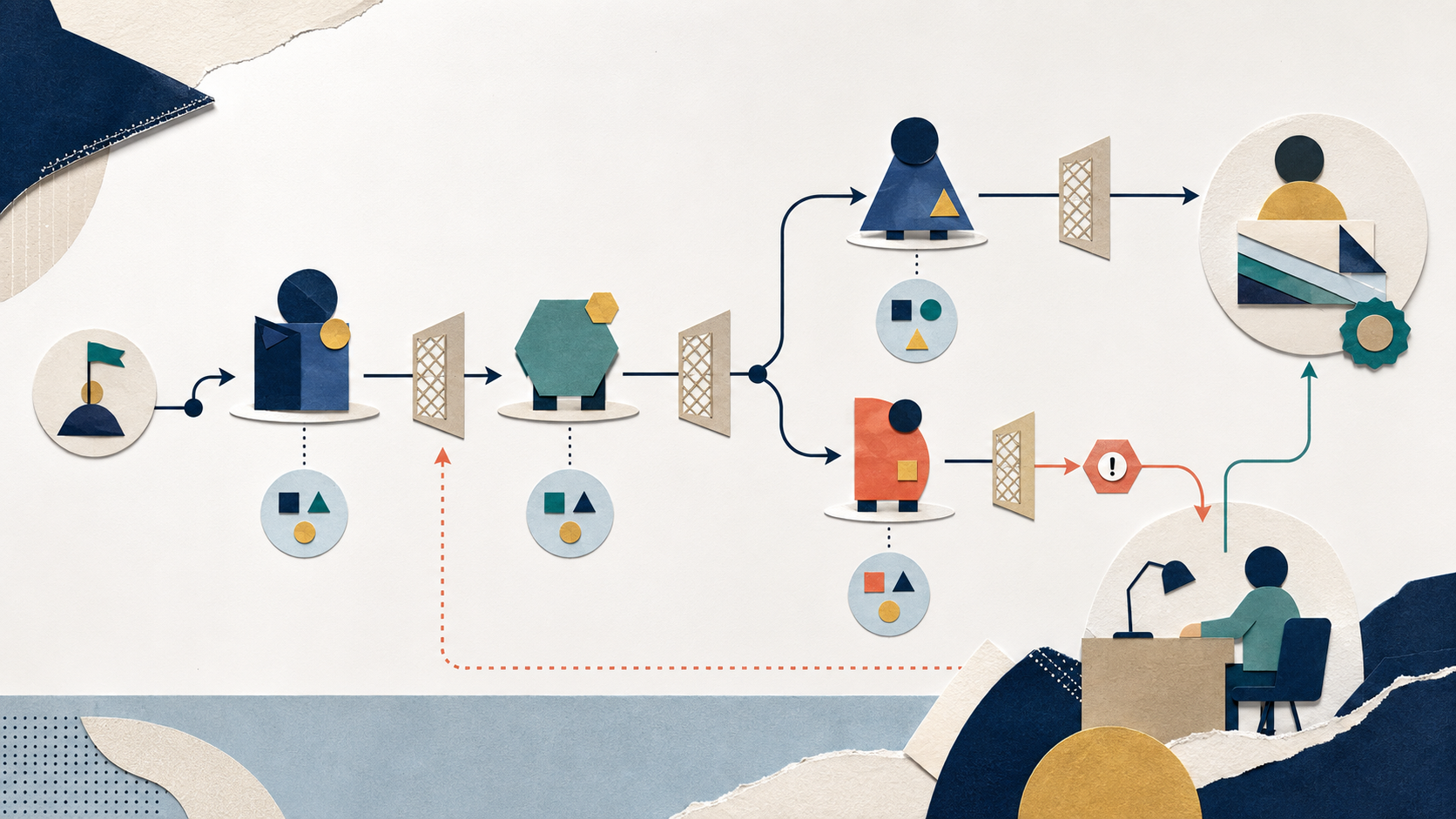
Govern goals, tools, permissions, handoffs, exceptions, and human escalation across autonomous agents.

Extend management, risk, security, safety, and accountability into intelligent robotic environments.
AIMRS™ stands for Artificial Intelligence Management, Risk & Security. It is pronounced “A-I-M-R-S” or “aimers.”
AIMRS™ is intended for organizations of every size and sector—from a small business adopting its first AI tool to a global enterprise operating complex intelligent systems. It can address AI applications, AI agents, AI workers, robotics, connected automation, and future intelligent-system categories.
No. AIMRS™ is a separate framework and standards ecosystem. Cyber Virtues AI Services and the future SaaS platform are distinct offerings.
AIMRS Certified, Practitioner, and Assessor describe the planned ecosystem. Requirements, availability, and credentialing details will be announced separately.
Use the public AIMRS™ resources to establish a practical baseline, understand the framework, and create a proportional improvement path for your organization.
Explore AIMRS™ Resources